Social media has once again become the center of a growing public debate after a series of viral messages began circulating online, claiming to reveal private conversations between several women and a well-known but largely unidentified man. These messages, shared widely across platforms, allegedly detail how agreements were discussed and finalized before any ad*lt content was created. While none of the claims have been officially verified, the situation has raised important questions about consent, transparency, personal responsibility, and the legal boundaries of private agreements that later become public.
According to multiple online sources, the leaked chats appear to show discussions around expectations, payments, travel plans, and conditions agreed upon by both sides. The women involved are said to be connected to online ad*lt content platforms, where direct communication between creators and clients is common. Supporters of the women argue that these conversations are proof of consent and negotiated terms, while critics question whether all parties fully understood the situation or whether there was any form of pressure or misrepresentation involved.
The messages, which have spread rapidly, allegedly include screenshots where financial amounts are discussed openly. In some cases, the women are said to have requested specific payments before agreeing to meet. Other screenshots appear to show logistical arrangements, including transport, accommodation details, and instructions related to the meeting. While screenshots can be edited or taken out of context, their circulation has been enough to trigger widespread discussion and speculation across the country.
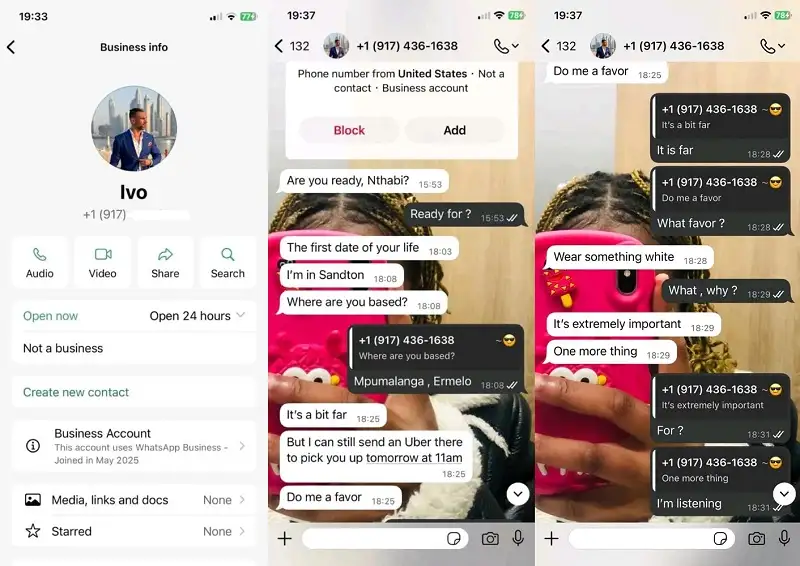
One of the most talked-about claims involves a woman believed to live in Tembisa, with other online posts suggesting connections to Giyani. According to the shared messages, she allegedly traveled from Ermelo in Mpumalanga to Sandton after being invited by the man. The conversations suggest that he was initially hesitant but later agreed to send money for transport, arranging for a taxi to collect her. The messages further claim that she was given guidance on what to wear and told to travel directly to Sandton, where the meeting was expected to take place. These details, though unverified, have captured public attention due to the long distance involved and the level of planning described.
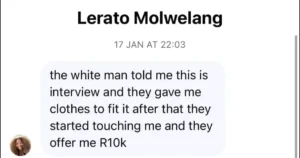
In another set of alleged conversations, a different woman claims she was approached under the belief that she was attending a legitimate modeling interview. According to her account, the situation changed once she arrived, and the meeting allegedly turned into a private arrangement involving ad*lt content. She further claims that a payment of R10,000 was discussed and that clothing was provided before any activity took place. These claims have added another layer to the story, as they raise concerns about possible misrepresentation and whether informed consent was present from the beginning.
Public reaction has been sharply divided. Some social media users believe that ad*lts who willingly enter into agreements, especially those involving written contracts, should be held accountable for their choices. From this perspective, if terms were discussed and accepted, the situation should remain a private matter unless clear laws were broken. Others argue that power imbalances, financial pressure, or misleading information can affect a person’s ability to give genuine consent, even if messages or contracts exist.
Advocacy groups have also joined the conversation, calling for stronger protections for individuals involved in online content creation. They argue that clearer regulations are needed to ensure that everyone fully understands what they are agreeing to and that there are safe, legal ways to resolve disputes when things go wrong. These groups stress that consent should be ongoing, informed, and free from pressure, regardless of any payments or written agreements.
There are also claims that law enforcement authorities are aware of the situation and are monitoring developments closely. Some sources suggest that contracts or written agreements may have been signed before the encounters took place. If such documents exist, they could play an important role in determining whether any laws were violated or whether the issue remains a civil dispute between consenting ad*lts. At this stage, however, no official statements have confirmed the authenticity of the messages or the existence of any contracts.
Legal experts commenting online have pointed out that written agreements do not automatically make all actions legal. Contracts cannot override the law, especially when issues like coercion, fraud, or lack of informed consent are involved. At the same time, they note that false accusations and the sharing of unverified information can cause serious harm to all parties involved. This makes careful investigation and due process essential before drawing conclusions.
The identity of the man at the center of the allegations has not been officially confirmed. While he is described as well-known, no names have been released by authorities, and no formal charges have been announced publicly. This has led to further debate about online accountability, trial by social media, and the long-term impact of viral accusations on reputations and mental health.
Beyond the specific individuals involved, the story highlights broader issues linked to the digital economy and online content creation. As more people use social media and subscription-based platforms to earn income, private interactions are increasingly documented through messages, voice notes, and screenshots. When these private records are shared publicly, they blur the line between personal agreements and public judgment.
The situation also serves as a reminder of the risks associated with meeting strangers, even when communication seems clear and professional. Experts advise individuals to take extra precautions, seek legal advice when signing contracts, and ensure they fully understand the nature of any agreement before committing. Transparency, clear communication, and personal safety remain key concerns in an industry that often operates in legal gray areas.
For the public, the case is a lesson in caution. Sharing unverified information can contribute to misinformation, harm innocent people, and complicate ongoing investigations. While public discussion can help highlight important social issues, it can also create pressure that interferes with fair legal processes.
As of now, the story continues to develop, with many questions still unanswered. Authorities have not released detailed information, and it remains unclear whether the matter will lead to criminal charges, civil action, or no legal consequences at all. What is clear is that the situation has sparked a necessary conversation about consent, contracts, and responsibility in the age of digital content.
Ultimately, the case underscores the importance of approaching such stories with balance and care. Respect for facts, patience for investigations, and empathy for all involved are essential. Until official findings are released, it is crucial to avoid assumptions and allow the truth to emerge through proper legal channels rather than social media speculation.