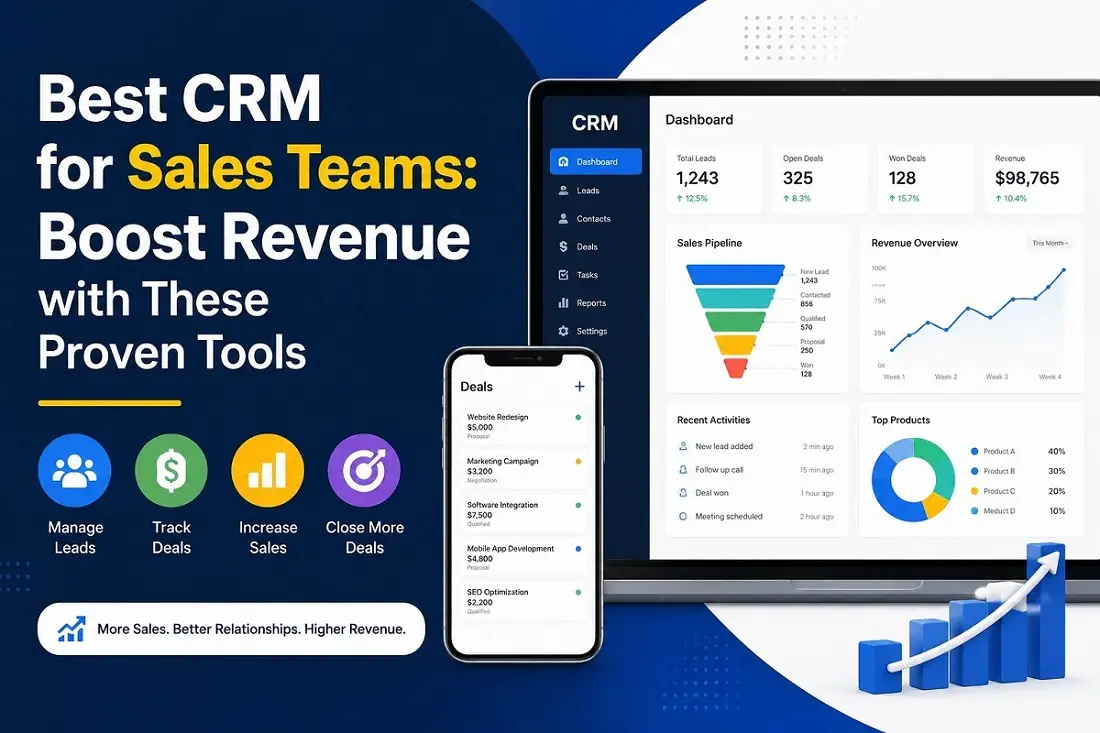
Looking to close more deals, shorten sales cycles, and skyrocket revenue? The right CRM for sales teams isn’t just a nice-to-have—it’s a revenue engine. In today’s hyper-competitive market, top-performing sales teams rely on powerful customer relationship management (CRM) platforms to organize leads, track interactions, automate follow-ups, and gain actionable insights. Whether you’re a small startup or a growing enterprise, choosing the best CRM for sales teams can make the difference between stagnant growth and explosive success.
This guide cuts through the noise to spotlight the most effective CRM tools designed specifically for sales-driven organizations. We’ll explore features that directly impact revenue, compare top platforms, and show you how to pick the one that aligns with your team’s workflow—so you can focus on what matters most: closing deals.
Why Your Sales Team Needs a Dedicated CRM
Without a centralized system, sales data gets scattered across emails, spreadsheets, and sticky notes. This chaos leads to missed follow-ups, duplicated efforts, and lost opportunities. A purpose-built CRM solves these problems by giving your team a single source of truth.
Here’s how a strong CRM directly boosts revenue:
- Lead Prioritization: Identify hot prospects with lead scoring and pipeline visibility.
- Faster Follow-Ups: Automate reminders and task assignments to reduce response time.
- Sales Forecasting: Use historical data and pipeline analytics to predict revenue with confidence.
- Team Collaboration: Share notes, update deal stages, and align efforts in real time.
- Performance Tracking: Monitor individual and team KPIs to coach and improve results.
Top-tier CRMs go beyond basic contact management. They integrate with email, calendars, marketing tools, and even AI-powered analytics—turning raw data into revenue-driving strategies.
Top 5 CRM Tools Proven to Increase Sales Revenue
Not all CRMs are created equal. Below are five platforms that consistently deliver results for sales teams across industries. Each has been vetted for usability, scalability, automation, and ROI.
1. HubSpot Sales Hub
HubSpot’s Sales Hub is a favorite among growing teams for its intuitive interface and powerful automation. It offers email tracking, meeting scheduling, deal pipelines, and live chat—all in one place.
Key revenue-boosting features:
- Automated email sequences that nurture leads without manual effort.
- Real-time notifications when prospects open emails or visit your website.
- Customizable dashboards to track conversion rates and deal velocity.
- Seamless integration with HubSpot’s marketing and service hubs for full-funnel visibility.
Best for: SMBs and scaling startups that want an all-in-one growth platform.
2. Salesforce Sales Cloud
Salesforce remains the gold standard for enterprise sales teams. Its Sales Cloud delivers unmatched customization, AI insights (via Einstein), and scalability.
Why it drives revenue:
- Predictive lead scoring helps reps focus on high-conversion prospects.
- Advanced reporting tools uncover trends and bottlenecks in your sales process.
- Mobile-first design ensures reps stay productive on the go.
- AppExchange offers thousands of integrations with tools like Slack, Zoom, and DocuSign.
Best for: Large organizations with complex sales cycles and dedicated admin support.
3. Pipedrive
Pipedrive is built by salespeople, for salespeople. Its visual pipeline keeps deals moving forward, and its simplicity reduces onboarding time.
Revenue advantages:
- Drag-and-drop pipeline management makes it easy to track deal progress.
- Built-in calling, email sync, and activity reminders keep reps on track.
- Smart automation rules reduce repetitive tasks like data entry.
- Transparent pricing with no hidden fees—ideal for budget-conscious teams.
Best for: Small to mid-sized teams that prioritize ease of use and fast implementation.
4. Zoho CRM
Zoho CRM offers enterprise-grade features at a fraction of the cost. It’s highly customizable and packed with AI-driven tools like Zia (their virtual assistant).
Revenue-boosting capabilities:
- AI-powered sales predictions and anomaly detection.
- Multi-channel communication (email, phone, social, chat) in one dashboard.
- Workflow automation that triggers actions based on customer behavior.
- Strong integration with Zoho’s suite of business apps (e.g., Books, Campaigns).
Best for: Cost-effective scalability, especially for teams already using Zoho products.
5. Freshsales (by Freshworks)
Freshsales combines AI, automation, and intuitive design to help teams close deals faster. It’s known for its 360-degree customer view and built-in phone system.
How it increases revenue:
- AI-based lead scoring ranks prospects by conversion likelihood.
- Built-in phone, email, and chat reduce app switching.
- Event-based triggers (e.g., website visits) prompt timely follow-ups.
- Visual sales reports help managers identify coaching opportunities.
Best for: Teams that want a modern, user-friendly CRM with strong built-in communication tools.
Key Features to Look for in a Revenue-Driving CRM
Not every CRM will fit your team’s needs. To maximize ROI, prioritize these must-have features when evaluating options:
Pipeline Management
A clear, visual sales pipeline helps reps understand where each deal stands. Look for drag-and-drop stages, customizable fields, and progress tracking.
Automation
Automate repetitive tasks like sending follow-up emails, updating deal stages, or assigning leads. This frees up time for high-value selling activities.
Integration Capabilities
Your CRM should connect seamlessly with tools you already use—email (Gmail, Outlook), calendars, marketing automation (Mailchimp, ActiveCampaign), and support platforms (Zendesk, Intercom).
Mobile Access
Sales reps are often on the move. A mobile app with full functionality ensures they can update deals, check contacts, and log calls from anywhere.
Reporting & Analytics
Real-time dashboards and customizable reports help you track metrics like win rate, average deal size, and sales cycle length—key indicators of revenue health.
AI and Predictive Insights
AI-powered CRMs can forecast revenue, suggest next best actions, and flag at-risk deals. These insights give your team a competitive edge.
How to Choose the Right CRM for Your Sales Team
With so many options, selecting the best CRM for sales teams can feel overwhelming. Follow this simple framework to make a confident decision:
- Assess Your Sales Process: Map out your current workflow. Identify pain points—like lost leads or slow follow-ups—that a CRM should solve.
- Define Must-Have Features: List non-negotiable tools (e.g., email integration, mobile app, automation).
- Consider Team Size and Growth: A 5-person team doesn’t need the same CRM as a 100-person enterprise.
- Test with a Free Trial: Most platforms offer 14- to 30-day trials. Involve your sales reps in testing—usability matters.
- Evaluate Support and Training: Look for onboarding resources, live chat support, and community forums.
- Calculate Total Cost of Ownership: Include subscription fees, add-ons, training, and potential downtime during migration.
Remember: The best CRM isn’t the one with the most features—it’s the one your team actually uses.
Key Takeaways
- The right CRM for sales teams directly increases revenue by improving lead management, follow-up speed, and sales forecasting.
- Top platforms like HubSpot, Salesforce, Pipedrive, Zoho CRM, and Freshsales offer proven tools to close more deals.
- Prioritize features like pipeline visibility, automation, mobile access, and AI insights when choosing a CRM.
- Involve your sales team in the selection process to ensure adoption and long-term success.
- A well-implemented CRM doesn’t just organize data—it transforms your sales strategy.
FAQ
What is the best CRM for a small sales team?
For small teams, Pipedrive and HubSpot Sales Hub are excellent choices. They’re easy to set up, affordable, and offer strong automation and pipeline management without overwhelming complexity.
Can a CRM really increase my sales revenue?
Yes. Studies show that companies using CRM systems see an average revenue increase of 29%. By improving lead tracking, reducing response times, and enabling data-driven decisions, CRMs directly contribute to higher close rates and larger deal sizes.
How long does it take to see results from a new CRM?
Most teams notice improvements within 4–8 weeks of implementation. Full ROI—measured in increased revenue and productivity—typically appears within 3–6 months, depending on training, adoption, and process alignment.
Final Thoughts
Investing in the best CRM for sales teams isn’t just about technology—it’s about transformation. The right platform empowers your reps to work smarter, not harder, turning prospects into paying customers faster and more consistently. With the tools and insights highlighted in this guide, you’re equipped to choose a CRM that doesn’t just manage relationships—but accelerates revenue growth.
Don’t let disorganization and missed opportunities hold your team back. Start your free trial today, and watch your sales pipeline—and revenue—soar.