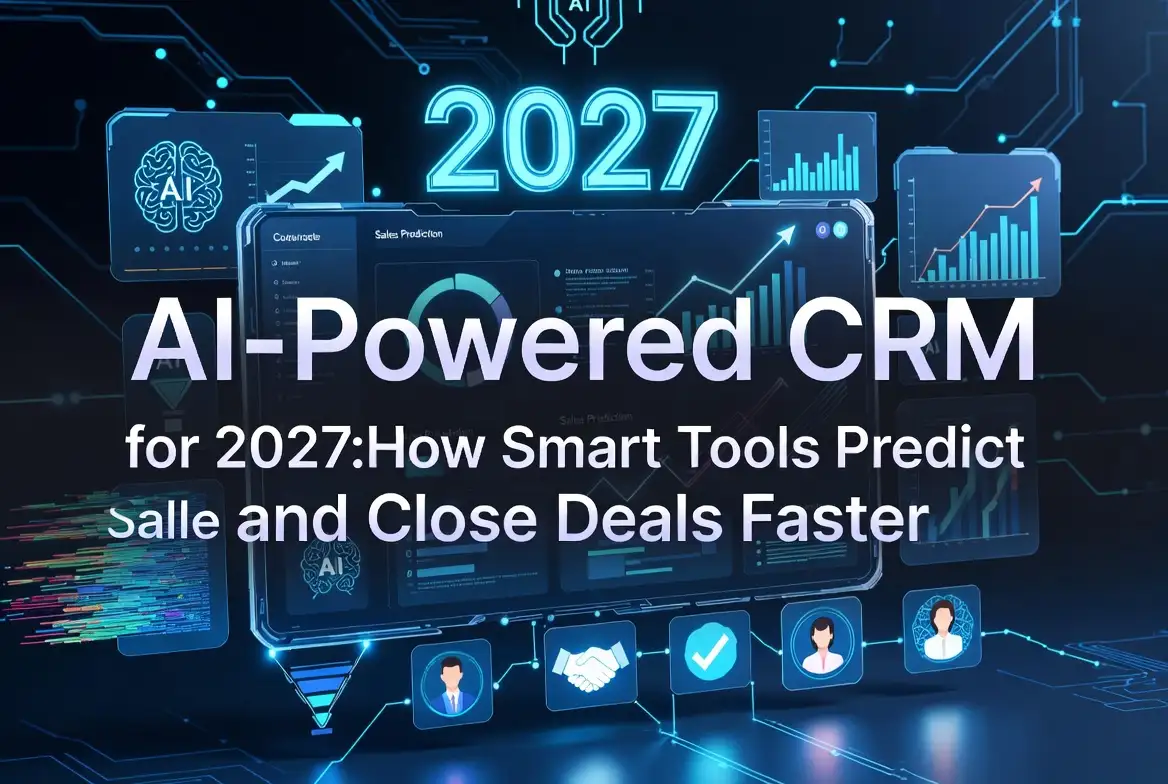
Imagine knowing which deals will close—before your sales team even picks up the phone. That’s not science fiction. It’s the reality of AI-powered CRM for 2027. These intelligent systems don’t just store customer data—they analyze behavior, forecast outcomes, and guide your team toward faster, smarter sales. If you’re still relying on manual lead scoring or gut instinct, you’re already behind.
By 2027, AI-driven CRM platforms will be standard across high-performing sales organizations. They’ll predict customer intent, recommend next-best actions, and automate follow-ups with surgical precision. The result? Shorter sales cycles, higher conversion rates, and revenue growth that outpaces competitors still stuck in spreadsheets and outdated workflows.
Why Traditional CRM Falls Short in 2027
Legacy CRM systems were built for data entry, not decision-making. They track contacts, log calls, and schedule meetings—but they don’t think. In 2027, that’s a liability. Customers expect personalized experiences, and sales teams need real-time insights to deliver them.
Without AI, your CRM is like a library with no librarian. All the information is there, but no one knows how to find it—or what it means. You might have thousands of leads, but which ones are ready to buy? Which accounts are at risk of churning? Traditional tools can’t answer these questions. AI-powered CRM can.
The Shift from Reactive to Predictive Selling
Old-school CRM waits for action. It records what happened after the fact. AI-powered CRM anticipates what will happen next. It learns from historical data, identifies patterns, and flags high-probability opportunities before they slip through the cracks.
This shift from reactive to predictive selling changes everything. Instead of chasing every lead equally, your team focuses on the ones most likely to convert. That means less wasted time, higher morale, and faster revenue growth.
How AI-Powered CRM Predicts Sales in 2027
AI-powered CRM uses machine learning algorithms to analyze vast datasets—past purchases, email engagement, website behavior, support tickets, and even sentiment in customer conversations. It doesn’t just count interactions; it interprets them.
For example, if a lead downloads a pricing guide, visits your product demo page three times in a week, and responds positively to a follow-up email, the AI scores them as “high intent.” It might even suggest sending a personalized video message or scheduling a call within 24 hours.
Key Predictive Capabilities of 2027 AI CRM
- Lead Scoring 2.0: AI evaluates dozens of behavioral and firmographic signals to rank leads by conversion probability—not just demographics.
- Deal Forecasting: Predicts which opportunities will close, when, and at what value—reducing forecast errors by up to 40%.
- Churn Risk Detection: Flags at-risk customers based on usage drops, support complaints, or reduced engagement.
- Next-Best-Action Recommendations: Suggests the optimal follow-up step—email, call, demo, discount—based on real-time context.
- Conversation Intelligence: Analyzes sales calls and emails to identify winning language, objection patterns, and coaching opportunities.
These features aren’t just nice-to-haves—they’re essential for staying competitive. In 2027, sales success won’t depend on who has the most leads, but who uses them most intelligently.
Faster Deal Closures: The Real Impact of AI CRM
Speed wins in sales. The faster you respond, the more likely you are to close. AI-powered CRM accelerates every stage of the funnel—from lead qualification to contract signing.
Consider this: AI can trigger automated workflows the moment a lead shows buying signals. A prospect who requests a demo gets an instant confirmation, a calendar link, and a personalized follow-up—all without human intervention. That responsiveness builds trust and keeps momentum alive.
Real-World Results from Early Adopters
Companies already using AI-powered CRM report dramatic improvements:
- A B2B SaaS firm reduced its sales cycle from 90 to 58 days by using AI to prioritize high-intent leads.
- A manufacturing distributor increased win rates by 32% after implementing predictive deal scoring.
- A financial services provider cut churn by 27% using AI to identify at-risk clients and trigger retention campaigns.
These aren’t outliers. They’re the new normal for organizations that treat CRM as a strategic asset—not just a contact database.
Integration: AI CRM Doesn’t Work in Isolation
AI-powered CRM delivers maximum value when it’s connected to your entire tech stack. In 2027, the best systems integrate seamlessly with email platforms, marketing automation, ERP, customer support tools, and even external data sources like LinkedIn or ZoomInfo.
This integration creates a 360-degree view of the customer. AI can pull in data from a support ticket, cross-reference it with past purchases, and recommend a renewal offer—all in real time. The result? Smarter decisions, fewer silos, and a unified customer experience.
What to Look for in an AI CRM Platform
Not all AI CRM tools are created equal. When evaluating platforms for 2027, prioritize these features:
- Native AI, not add-ons: The AI should be built into the core system, not bolted on as an afterthought.
- Explainable predictions: You should understand why the AI recommends a certain action—not just accept a black-box output.
- Customizable models: The ability to train AI on your unique sales process and customer behavior.
- Real-time processing: Insights should update instantly as new data comes in.
- Strong data security: AI handles sensitive customer information—compliance with GDPR, CCPA, and other regulations is non-negotiable.
Choosing the right platform now will position your team for long-term success.
Overcoming Common Objections to AI CRM
Some leaders worry that AI will replace salespeople. That’s a myth. AI doesn’t eliminate jobs—it elevates them. Reps spend less time on admin and more time building relationships. Managers get better forecasts and coaching insights. Leaders make data-driven strategic decisions.
Others fear complexity. But modern AI CRM is designed for usability. Dashboards are intuitive, alerts are actionable, and training is built in. Most teams see productivity gains within weeks—not months.
Cost is another concern. But consider the ROI: faster deals, higher win rates, and reduced churn quickly offset the investment. In 2027, not using AI CRM will cost more than adopting it.
Key Takeaways: What You Need to Know
- AI-powered CRM for 2027 is no longer optional—it’s essential for competitive sales teams.
- These systems predict sales outcomes, recommend actions, and automate workflows to close deals faster.
- Key capabilities include predictive lead scoring, deal forecasting, churn detection, and conversation intelligence.
- Integration with other tools creates a unified, real-time view of the customer.
- Early adopters are already seeing shorter sales cycles, higher win rates, and improved customer retention.
- AI enhances—not replaces—human sellers by freeing them from manual tasks and providing actionable insights.
FAQ: AI-Powered CRM for 2027
How accurate are AI sales predictions in 2027?
Modern AI models achieve 85–92% accuracy in lead scoring and deal forecasting when trained on quality data. Accuracy improves over time as the system learns from your specific sales patterns and customer behaviors.
Can small businesses benefit from AI-powered CRM?
Absolutely. Many AI CRM platforms now offer scalable pricing and pre-built models tailored for SMBs. Even teams with 5–10 reps can see faster deal closures and better pipeline visibility.
Will AI CRM work with my existing tools?
Top platforms support integrations with popular tools like Salesforce, HubSpot, Microsoft 365, Slack, and Zapier. Always verify compatibility during your evaluation to ensure smooth data flow.
The Future Is Already Here
AI-powered CRM for 2027 isn’t a distant vision—it’s happening now. The companies that embrace it will close deals faster, retain more customers, and outmaneuver competitors still relying on outdated methods. The question isn’t whether to adopt AI CRM. It’s how quickly you can implement it before your rivals do.
Start by auditing your current CRM. Identify gaps in forecasting, lead management, and automation. Then explore platforms with native AI capabilities. Pilot one with your sales team. Measure the impact on cycle time, win rate, and revenue.
The tools are ready. The data is there. The only thing left is action.