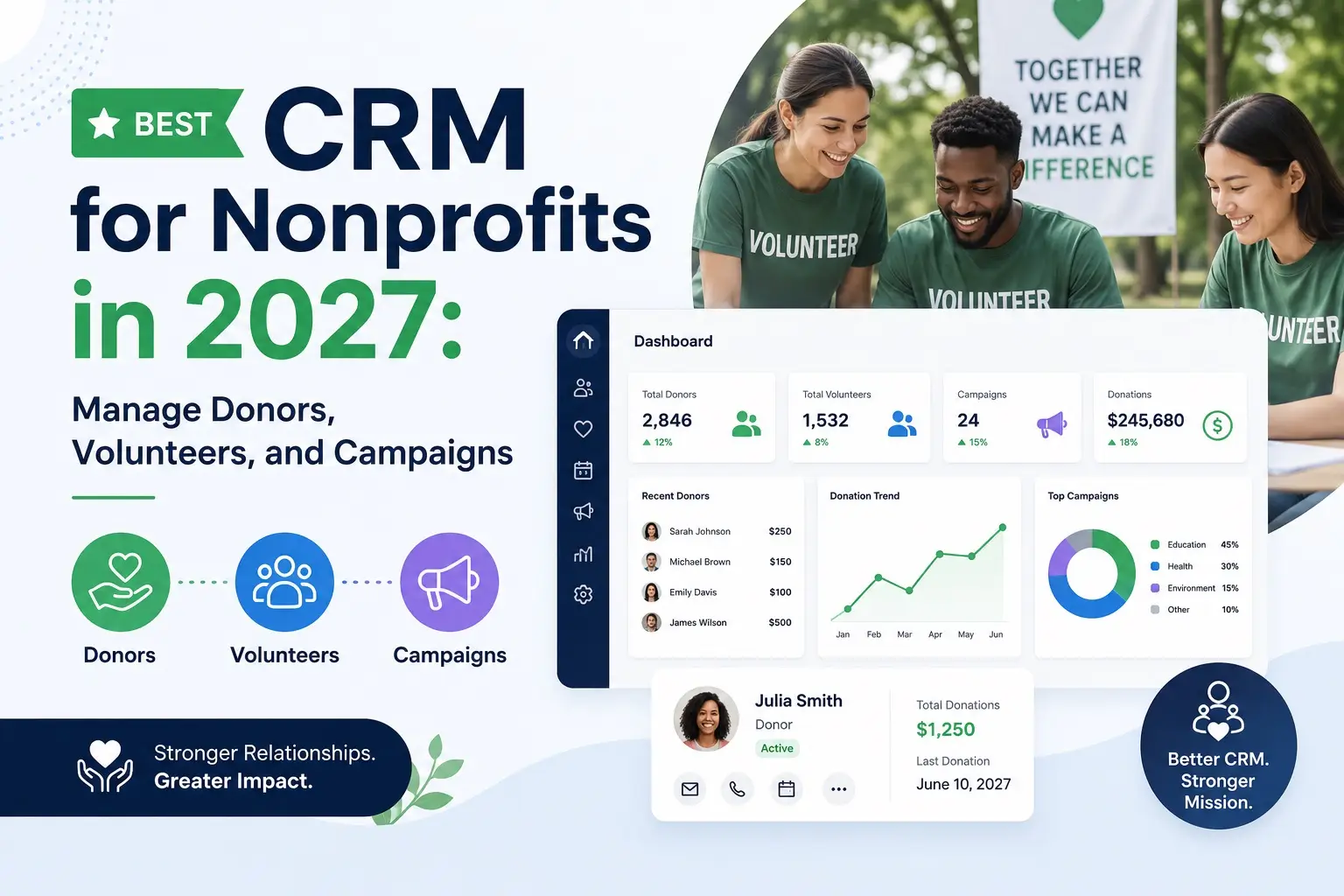
Running a nonprofit in 2027 means juggling donors, volunteers, fundraising campaigns, and mission-driven outreach—all with limited resources. The right CRM for nonprofits isn’t just a nice-to-have; it’s essential for streamlining operations, boosting donor retention, and scaling impact. In this guide, we’ll break down the best nonprofit CRM platforms that help you manage donors, volunteers, and campaigns efficiently—so you can focus on what truly matters: your cause.
Why Nonprofits Need a Specialized CRM in 2027
Generic customer relationship management tools fall short when it comes to nonprofit needs. Unlike for-profit businesses, nonprofits must track complex donor journeys, recurring gifts, volunteer hours, event participation, and grant reporting—all while maintaining transparency and trust. A dedicated nonprofit CRM is built to handle these unique workflows.
Modern nonprofit CRMs offer features like:
- Donor lifecycle tracking (from first gift to major donor)
- Automated acknowledgment letters and tax receipts
- Volunteer scheduling and hour logging
- Campaign performance analytics
- Integration with fundraising platforms like Donorbox, GiveLively, or Classy
With donor expectations rising and competition for funding increasing, having a centralized system that connects your fundraising, volunteer management, and outreach efforts is no longer optional—it’s strategic.
Top 5 Best CRMs for Nonprofits in 2027
1. Bloomerang
Bloomerang consistently ranks as the top CRM for nonprofits, especially for small to mid-sized organizations. Its intuitive interface and donor-centric design make it easy to track giving history, engagement levels, and retention metrics. Bloomerang excels in donor retention—a critical factor since retaining a donor is far more cost-effective than acquiring a new one.
Key features include:
- Predictive donor scoring to identify high-potential supporters
- Automated email workflows for stewardship
- Built-in reporting dashboard with real-time insights
- Seamless integration with Mailchimp, QuickBooks, and online giving tools
Bloomerang offers transparent pricing based on contact count, with discounts for 501(c)(3) organizations. It’s ideal for nonprofits focused on long-term donor relationships.
2. Neon CRM (by Neon One)
Neon CRM is a powerful all-in-one solution designed specifically for nonprofits. It combines donor management, event planning, volunteer coordination, and online fundraising in a single platform. Its strength lies in flexibility—whether you’re running a gala, managing a peer-to-peer campaign, or tracking grant applications.
Notable capabilities:
- Customizable volunteer portals with self-service sign-up
- Integrated payment processing with low transaction fees
- Advanced segmentation for targeted outreach
- Mobile-responsive donor forms and event registration
Neon CRM is particularly strong for organizations running multiple campaigns simultaneously. Its reporting tools help measure ROI across channels, making it easier to justify budgets and report to boards.
3. Salesforce Nonprofit Cloud
For larger nonprofits or those with complex operational needs, Salesforce Nonprofit Cloud offers enterprise-level scalability. Built on the world’s leading CRM platform, it provides deep customization, automation, and integration capabilities. While it has a steeper learning curve, the long-term benefits for data-driven organizations are substantial.
Salesforce shines in:
- Managing large donor databases with millions of records
- Creating custom objects for grants, programs, or beneficiaries
- Using AI-powered tools like Einstein Analytics for forecasting
- Connecting with thousands of apps via the AppExchange
Through the Power of Us program, eligible nonprofits can access Salesforce licenses at no cost or deeply discounted rates. Training and implementation support are available through certified partners.
4. Kindful (by Bloomerang)
Kindful is another standout CRM tailored for nonprofits, now part of the Bloomerang family. It’s known for its user-friendly design and strong integration with popular fundraising tools. Kindful is especially effective for organizations that rely heavily on online donations and digital engagement.
Top features include:
- One-click integration with GiveLively, PayPal, and Stripe
- Automated donation receipts and year-end tax summaries
- Simple volunteer tracking with check-in/out functionality
- Drag-and-drop email builder for newsletters and appeals
Kindful is a great middle-ground option—more robust than basic tools but less complex than Salesforce. It’s perfect for growing nonprofits ready to level up their donor management.
5. Little Green Light
Little Green Light is a cloud-based CRM that balances simplicity with functionality. It’s particularly popular among small nonprofits, faith-based organizations, and schools. The platform emphasizes ease of use without sacrificing powerful reporting and communication tools.
What sets it apart:
- Customizable dashboards for staff and board members
- Built-in letter and email templates with merge fields
- Volunteer management with skills tracking and availability calendars
- Affordable pricing with no setup fees
Little Green Light also offers excellent customer support, including live training sessions and a responsive help desk—something many smaller nonprofits value highly.
How to Choose the Right Nonprofit CRM for Your Organization
With so many options, selecting the best CRM for your nonprofit depends on your size, goals, and technical capacity. Here’s a quick framework to guide your decision:
Assess Your Core Needs
Start by identifying your biggest pain points. Are you struggling with donor retention? Overwhelmed by volunteer coordination? Need better campaign tracking? Match your top priorities to CRM features.
Consider Your Budget
Nonprofit CRMs range from free (with limitations) to thousands per year. Many vendors offer discounts or grants for 501(c)(3)s. Factor in not just subscription costs but also implementation, training, and integration expenses.
Evaluate Ease of Use
A powerful CRM is useless if your team won’t use it. Look for intuitive interfaces, mobile access, and strong onboarding support. Request a demo or free trial to test usability firsthand.
Check Integration Capabilities
Your CRM should work seamlessly with your existing tools—email marketing, accounting software, event platforms, and social media. Native integrations save time and reduce data silos.
Plan for Growth
Choose a platform that can scale with your organization. A CRM that works for 500 donors may not handle 10,000. Look for flexible pricing tiers and upgrade paths.
Key Takeaways: What Makes a CRM Truly Effective for Nonprofits
- Donor-Centric Design: The best nonprofit CRMs prioritize donor relationships with tools for tracking engagement, preferences, and giving history.
- Volunteer Management: Look for scheduling, hour tracking, and communication features that keep volunteers engaged and accountable.
- Campaign Analytics: Real-time reporting helps you measure success, adjust strategies, and demonstrate impact to stakeholders.
- Automation: Save time with automated receipts, thank-you emails, and follow-up sequences.
- Affordability & Support: Nonprofits need cost-effective solutions with reliable customer service and training resources.
FAQ: Common Questions About Nonprofit CRMs
What is the best free CRM for nonprofits?
While fully free CRMs are rare, some platforms offer limited free tiers or nonprofit grants. Salesforce Nonprofit Cloud provides free licenses through its Power of Us program. Bloomerang and Kindful also offer discounted plans for small organizations. Always check eligibility and feature limitations before committing.
Can a nonprofit CRM help increase donations?
Absolutely. A good CRM helps you identify major donor prospects, personalize outreach, and improve retention—all of which directly impact fundraising success. Features like donor scoring, automated stewardship, and campaign tracking enable smarter, more effective fundraising.
Do I need technical expertise to use a nonprofit CRM?
Not necessarily. Many modern CRMs are designed for non-technical users with drag-and-drop interfaces, guided setup, and training resources. However, larger platforms like Salesforce may require some training or support during implementation. Most vendors offer onboarding assistance to help your team get started.
Final Thoughts: Invest in the Right Tools to Amplify Your Mission
In 2027, the most successful nonprofits aren’t just passionate—they’re strategic. The right CRM empowers you to manage donors, volunteers, and campaigns with precision and care. Whether you’re a grassroots organization or a national charity, investing in a purpose-built nonprofit CRM is one of the smartest decisions you can make.
Take the time to evaluate your needs, test a few platforms, and choose a system that grows with you. With the right tools, your team can spend less time managing data and more time making a difference.